If you’ve ever stood in a hardware store aisle staring at a row of amber-colored cans — tung oil, linseed oil, Danish oil, teak oil — you already know the finish market does not make things easy. A penetrating oil finish is any product that soaks into wood fibers rather than building a film on top, the way polyurethane or lacquer does. The result is a lower-sheen, more tactile surface that many woodworkers describe as “letting the wood breathe,” though what that really means is: the grain stays readable, the surface feels like wood rather than plastic, and repairs are far simpler. Tung oil and linseed oil are the two originals in this category — plant-derived, widely available, and used for centuries on everything from ship decks to fine furniture. They are also genuinely different products with different performance profiles, different costs, and — this is the part most guides skip — meaningfully different fire and health risks that matter from the first coat onward. This guide lays out the comparison honestly, with enough depth to inform a decision you’re making right now.
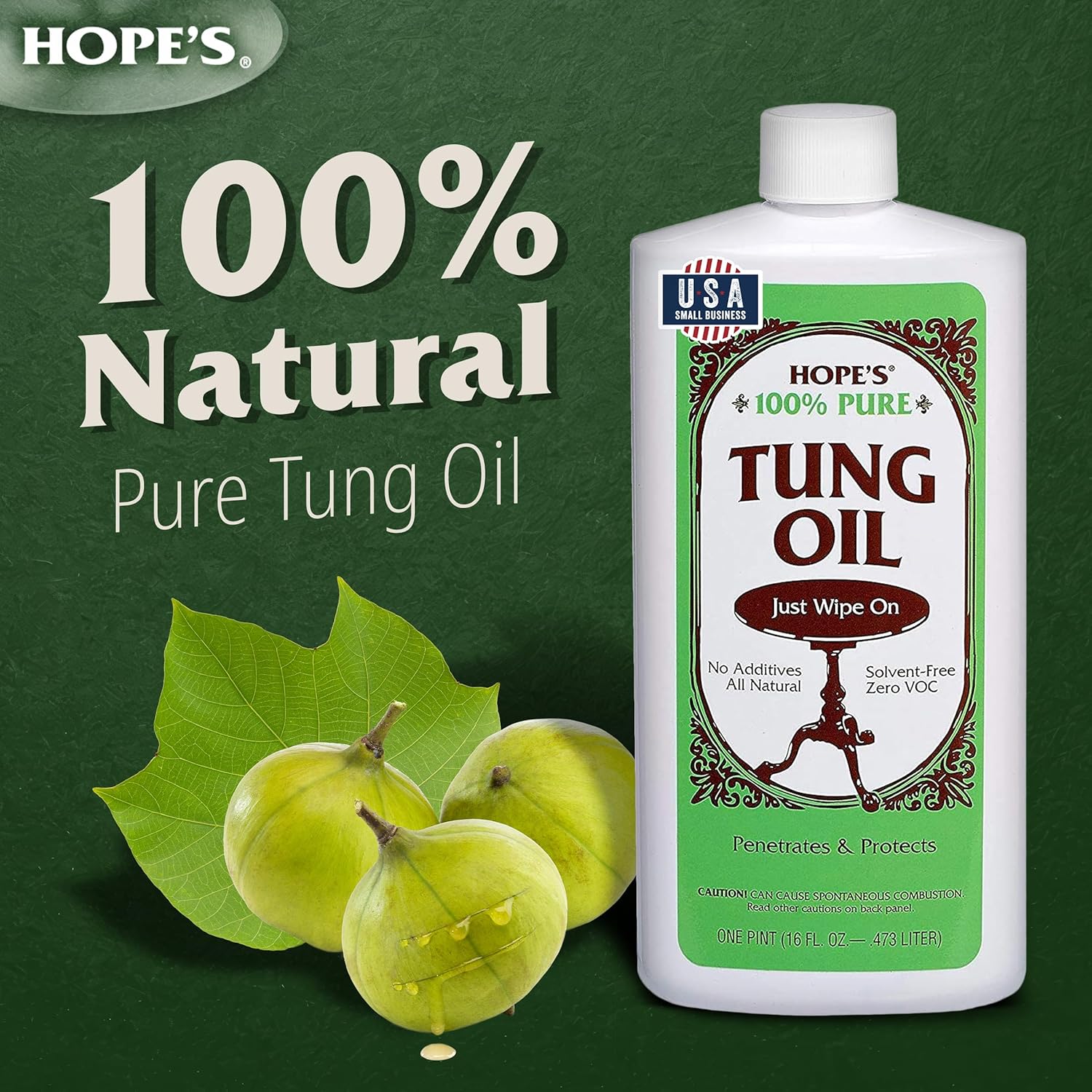
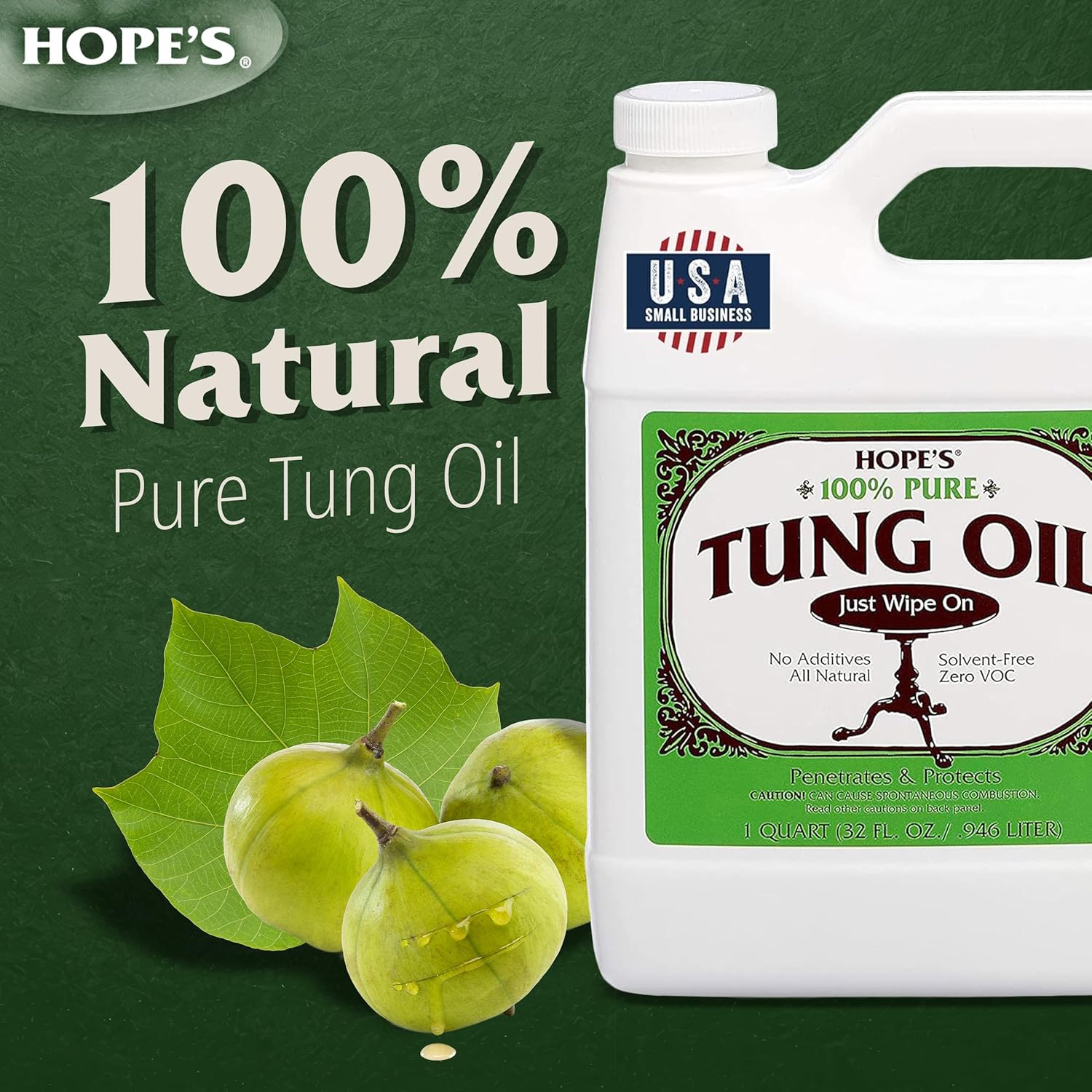
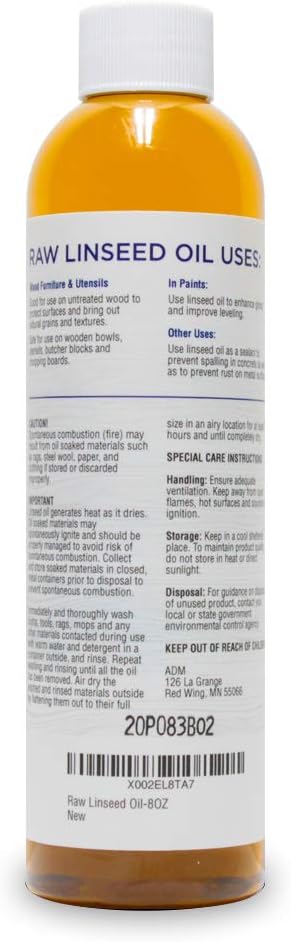
| EDITOR'S PICKTried & True Original Wood Fini… | Mid-tierHOPE'S 100% Pure Tung Oil | Budget pick[LinSheen Raw Linseed Oil – Flax…](https://www.amazon.com/dp/B082C5D2X2?tag=greenflower20-20) | |
|---|---|---|---|
| Oil Type | Linseed Oil & Beeswax Blend | 100% Pure Tung Oil | Raw Linseed Oil |
| Food Safe | ✓ | ✓ | — |
| Size | 1 Pt | 32 Fl Oz | 8 Fl Oz |
| Waterproof | — | ✓ | — |
| Indoor/Outdoor | — | ✓ | — |
| Non-Toxic | ✓ | — | — |
| Price | $35.99 | $29.99 | $15.99 |
| See on Amazon → | See on Amazon → | See on Amazon → |
What You’re Actually Buying: Pure vs. Modified Oils
Before you can compare tung and linseed oil, you have to understand a labeling problem that affects both of them.
Tung oil is pressed from the seed of the Aleurites fordii tree, native to China. In its pure form, it’s one of the more water-resistant penetrating finishes available — it polymerizes (hardens through oxidation) into a reasonably durable film. The problem is that most products marketed as tung oil contain very little actual tung oil. As Fine Woodworking has reported in its oil finishes coverage (Taunton Press), many “tung oil” products on retail shelves are blends of mineral spirits, varnish, and sometimes only trace amounts of tung oil — essentially a wiping varnish sold under a more romantic label. Pure tung oil is available from specialty suppliers, often labeled “100% pure tung oil,” but it costs more and cures more slowly.
Linseed oil comes from flaxseed and has an even longer track record — it’s the binder in traditional oil paints. It comes in three common forms that behave very differently:
- Raw linseed oil (RLO): the unmodified oil. Very slow drying — weeks, not days — and sticky for a long time. Rarely used straight in woodworking.
- Boiled linseed oil (BLO): the workshop standard. Despite the name, modern BLO is raw linseed oil with metallic driers (typically cobalt or manganese compounds) added to accelerate oxidation. It cures in 24–72 hours under good conditions.
- Polymerized linseed oil: heat-processed to pre-initiate polymerization, resulting in a thicker, faster-curing product with better durability. Less common and more expensive, but closer in performance to tung oil.
For the comparison that follows, “tung oil” means pure or high-purity tung oil, and “linseed oil” means boiled linseed oil — the versions most practitioners will actually use.
Head-to-Head Performance: Three Dimensions That Matter
Water and Stain Resistance
This is the dimension where the gap between the two oils is largest, and where the wrong choice costs the most in rework.
Wood Magazine’s coverage of penetrating finishes notes that tung oil cures to a semi-matte film with meaningful water repellency — a bead-and-sheeting response rather than instant absorption. It is a reasonable single-oil choice for surfaces that see intermittent moisture: a walnut dining table, a mahogany side table near a kitchen, a teak outdoor bench that comes inside for winter.
Linseed oil offers moderate water resistance at best. It is not a finish you would choose for a kitchen countertop or bathroom vanity without an additional topcoat. On furniture that stays dry, it performs adequately; in wet-contact situations, tung oil or a film finish is the honest recommendation.
This Old House’s floor finishing guidance is explicit on this point: penetrating oils alone — tung or linseed — are maintenance-intensive relative to conversion varnishes or water-based polyurethanes when used on hardwood floors. They are appropriate for a traditional oiled-floor aesthetic (common in Scandinavian-style interiors with wide-plank European white oak) but require annual or biannual recoating to maintain water resistance.
HOPE'S
$29.99
In stock on Amazon
Check price on AmazonCure Time and Recoat Window
Cure time is where linseed oil has a practical edge — specifically boiled linseed oil, which cures faster than pure tung oil and is more forgiving in cool shop conditions.
| Finish | Tack-free time | Full cure | Typical coats |
|---|---|---|---|
| Pure tung oil | 24–48 hrs per coat | 15–30 days | 3–5 |
| Boiled linseed oil | 18–36 hrs per coat | 7–14 days | 2–4 |
| Polymerized linseed oil | 12–24 hrs per coat | 5–10 days | 2–3 |
Fine Woodworking’s finishing coverage consistently notes that temperatures below 60°F can stall oxidation-based finishes significantly — plan cure schedules around shop temperature, not calendar days. Rushing recoats on either oil is a rework problem: a coat applied over a still-tacky previous coat will not cure properly and may require stripping.
LinSheen
$15.99
In stock on Amazon
Check price on AmazonDurability and Long-Term Repairability
Neither oil is a durability champion compared to catalyzed lacquer or two-part polyurethane. Both scratch and dent in normal use. The meaningful trade-off is repairability: scratches are easily remedied by wiping in a fresh coat of the same oil — no stripping, no full refinish, no color-matching a different product. For furniture makers building heirloom pieces intended to develop patina over decades, this is a genuine feature. For floors or tabletops in active households with children, it is a maintenance commitment that should be priced into the project before the finish is specified.
Tung oil’s edge in water resistance translates into modestly better durability on surfaces that see regular cleaning or moisture. Linseed oil’s slightly faster recoat window makes it easier to maintain on large surface areas like floors, where annual touch-up coats are part of the ownership model. Neither oil is a set-and-forget finish — both require owner education or a maintenance schedule built into a client handoff.

Tried
$35.99
In stock on Amazon
Check price on AmazonThe Safety Section Most Finishing Guides Omit
This section deserves more space than it typically receives. Both tung oil and boiled linseed oil generate heat as they cure through oxidation. When oil-soaked application rags are crumpled, folded, or piled — which traps the heat produced by that oxidation — they can self-ignite without any external spark or flame source.
The U.S. Fire Administration (a component of FEMA) specifically identifies linseed oil-soaked rags as a documented cause of workshop and residential fires in its guidance on spontaneous combustion of oily materials. OSHA’s Hazard Communication Standard requires manufacturers to produce a Safety Data Sheet (SDS) for every finishing product — these documents disclose flammability ratings, safe disposal procedures, and ventilation requirements, and reading them before application is not optional.
The only safe disposal methods for oil-soaked rags:
- Spread rags flat, single-layer, outdoors on a non-combustible surface until fully cured (stiff and dry to the touch), then dispose in a covered metal container.
- Submerge rags in water in a sealed metal container before disposal.
- Never fold, pile, or bag oily rags and leave them unattended — even for an hour.
Tung oil carries a somewhat lower spontaneous-combustion risk than boiled linseed oil because pure tung oil does not contain the metallic drier compounds that accelerate oxidation. “Lower risk” is not “no risk” — treat tung oil rags with the same disposal protocol.
VOC and Respiratory Exposure
Boiled linseed oil contains metallic driers — typically cobalt naphthenate or manganese compounds — that are concerning with prolonged skin or respiratory exposure. Work in ventilated spaces and wear nitrile gloves as standard practice.
Commercial products labeled as tung oil frequently contain mineral spirits or naphtha as solvents to extend and thin the product. The SDS for the specific product you purchase will disclose these constituents. Pure tung oil thinned with citrus solvent is the lowest-VOC option and is preferred in shops with limited ventilation.
Allergy note: Tung oil is derived from a tree nut. People with tree nut sensitivities have reported cross-reactive skin responses to tung oil, a finding noted in occupational dermatology literature. If you or a client has documented tree nut sensitivities, patch-test on an inconspicuous surface area or substitute boiled linseed oil.
Species-Specific Application Notes
Application behavior varies by wood species, and both oils have patterns woodworkers and finishing specialists report consistently across published guidance:
- White oak, red oak, ash: Both oils work well on these open-grain species. Linseed oil’s amber tone enhances the warm undertone of red oak in a way some makers prefer. Tung oil shows truer color on white oak, which designers frequently specify for Scandinavian-influenced interiors.
- Walnut: Either oil deepens chocolate tones effectively. Tung oil’s better water resistance makes it the stronger choice for walnut tabletops in active use.
- Maple, cherry: Tight-grained species are finicky with penetrating oils. Thin the first coat heavily — 50/50 with mineral spirits or citrus solvent — to prevent blotching from surface pooling. Boiled linseed oil on maple is particularly prone to uneven absorption.
- Teak, ipe, wenge: High-oil exotics resist penetrating finishes. Wipe the surface with mineral spirits to degrease natural oils before application, and expect more coats to achieve even penetration. Tung oil’s penetration profile generally outperforms linseed oil on these dense species.
- Mahogany (genuine and FSC-certified alternatives, per Forest Stewardship Council lumber sourcing standards): Both oils perform well. Linseed oil has a long historic relationship with mahogany in traditional furniture finishing, and its amber cast suits the reddish undertone of the species.
The Decision Frame: Matching Oil to Project
You came here with a project in mind. Here’s how to resolve it:
If you’re finishing wide-plank European white oak floors and want the traditional oiled Scandinavian aesthetic: pure tung oil or a high-quality Scandinavian hard-wax oil (which uses tung or linseed as its base) is the authentic choice. Budget for annual maintenance coats and communicate that expectation clearly to any client before the project starts.
If you’re finishing a walnut dining table or desktop where water resistance matters: tung oil is the better single-oil choice. Consider a Danish oil — a tung/varnish blend — if you want faster build with one fewer maintenance coat per year.
If you’re finishing an open-grain furniture piece in a low-humidity shop environment and want faster turnaround between coats: boiled linseed oil’s cure-time advantage is real. Don’t rush recoating — tacky intermediate coats are a rework problem that is far more expensive than waiting another 24 hours.
If you’re working with exotic species (padauk, wenge, teak): plan for more coats, more thinning, and longer cure time regardless of which oil you choose. Factor that labor into project pricing before you commit to a delivery date.
If you have a client, a deadline, and limited shop ventilation: neither penetrating oil is your fastest path to a durable finish. A water-based wiping varnish or a pre-catalyzed lacquer gets you there with less cure-time risk and a more predictable schedule. Save the oils for projects where the tactile character and long-term repairability justify the timeline.
The finish is never purely an aesthetic decision. It’s a durability commitment, a maintenance schedule, a safety protocol, and — on premium hardwood stock at $15–$40 per board-foot — an investment protection decision. Both tung oil and linseed oil are legitimate tools in that context. Knowing which one fits the specific project is what separates a well-specified job from a callback.