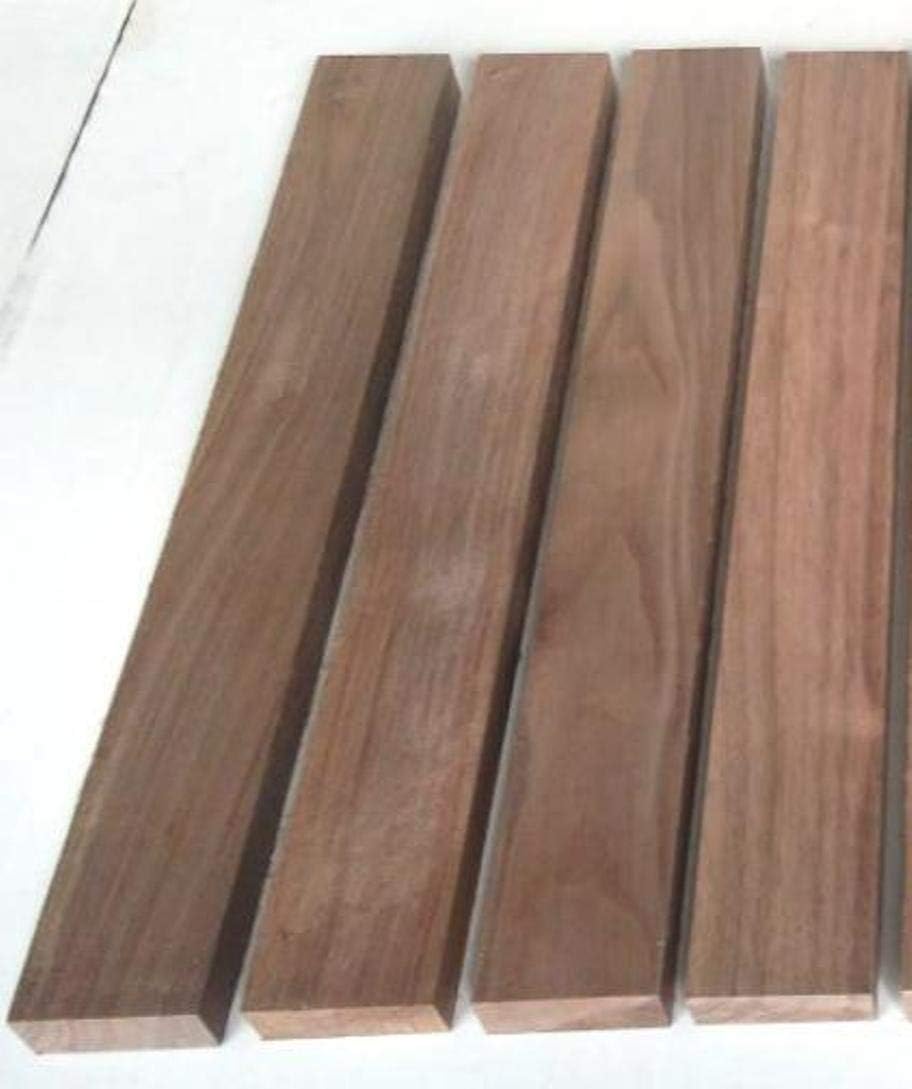
If you’ve ever walked into a big-box home improvement store hoping to find a nice piece of walnut or cherry for a weekend project, you already know the disappointment: a wall of pine, a shelf of poplar, and maybe some oak boards that look like they’ve had a rough life. That’s because the home-center lumber aisle is built for construction framing, not furniture or decorative woodworking. Hardwood lumber — the denser, slower-growing category of wood that includes species like walnut, maple, cherry, white oak, and exotic imports — is sold through a completely different supply chain, one that operates on different units, different grades, and different pricing logic than what you’ll find near the drywall. This guide demystifies that supply chain for hobbyists and intermediate buyers who don’t have a commercial sawmill account, showing you where to source quality material, how to evaluate it before you buy, and how to avoid the most expensive mistakes.
The Unit Problem: Why Hardwood Pricing Feels Confusing at First
The first thing that trips up new hardwood buyers is the unit. Construction lumber is priced by the linear foot or by the board (a 2×4 at a standard length). Hardwood is priced by the board-foot — a unit of volume, not length. One board-foot equals a piece of wood that is one inch thick, twelve inches wide, and twelve inches long, or any equivalent volume (so a board that’s two inches thick, six inches wide, and twelve inches long is also one board-foot). The formula: thickness in inches × width in inches × length in inches, divided by 144.
Why does this matter practically? Because when you see a price of $18/board-foot for figured maple at a specialty dealer like Hearne Hardwoods, you need to calculate how many board-feet your project actually requires — not just how many pieces or how many linear feet. A dining tabletop might run 20–25 board-feet. A set of six drawer fronts might be 4–6 board-feet. Getting this wrong in either direction either blows your materials budget or leaves you short at a critical moment.
By the numbers — typical 2026 retail pricing for hobbyist-grade stock:
| Species | Typical retail range | Common source tier |
|---|---|---|
| Hard maple (figured) | $12–$22/board-foot | Specialty dealer |
| Black walnut (select) | $14–$28/board-foot | Specialty dealer |
| White oak (flat-sawn) | $6–$11/board-foot | Local hardwood yard |
| Wenge | $18–$35/board-foot | Specialty/exotic dealer |
| Padauk | $10–$18/board-foot | Specialty/exotic dealer |
Pricing reflects published listings from Woodworker’s Source, Bell Forest Products, and Hearne Hardwoods as of early 2026. Figured, quartersawn, or wide-board stock commands the upper end of each range.
Hardwood is also sold in rough (unsurfaced, as it came from the saw) or S2S (surfaced two sides — the faces have been planed flat but the edges are still rough) or S4S (surfaced four sides, ready to use). Rough stock is cheaper per board-foot and gives you control over final thickness, but requires a planer and jointer. S4S costs more but is workshop-ready. For hobbyists without a full machine setup, S2S or S4S from a dealer is often the practical choice even if the per-board-foot price is higher.
Where to Actually Buy: A Honest Map of the Supply Chain
The hardwood supply chain has four tiers that matter to hobbyists, and they’re not equally accessible or equally priced.
Local hardwood dealers and urban lumber yards are the best starting point for most intermediate buyers. These are specialty retailers — not big-box stores — that stock domestic hardwoods in multiple species, grades, and thicknesses. You can select individual boards, inspect for grain figure, color consistency, and defects, and ask questions. Prices are typically $6–$15/board-foot for common domestic species. The limitation: selection varies by region, figured or exotic stock is inconsistent, and some dealers have minimum purchase requirements that make one-board shopping awkward.
Online specialty dealers have changed the hobbyist market significantly. Dealers like Woodworker’s Source, Bell Forest Products, and Owl Hardwood Lumber ship individual boards nationwide, with detailed photos and board-by-board pricing. Bell Forest Products’ listings, for instance, routinely include grain photos and board dimensions so you know exactly what you’re ordering — a meaningful improvement over buying blind. The tradeoff is shipping cost: hardwood is heavy. A 10-board-foot order can add $40–$80 in freight depending on distance and carrier. Build shipping into your cost-per-board-foot math before comparing against local pricing.
Figured and exotic specialist dealers like Hearne Hardwoods cater to woodworkers who need premium figured maple, crotch walnut, or rare domestic species. These aren’t commodity buyers — they’re sourcing one-of-a-kind material. Prices reflect that, running $18–$45/board-foot for premium figured stock. Fine Woodworking’s buying guides consistently point to dealers of this type as the primary source for exhibition-grade material, noting that the board-selection process often requires visiting in person or requesting photo approval before purchase.
Woodcraft retail stores (a national chain) occupy an interesting middle position: accessible to hobbyists, stocked with a rotating selection of domestic hardwoods and some exotics, and willing to sell single boards. Per-board-foot pricing is generally at the mid-to-high end for what you’re getting, but the convenience and ability to hand-select stock is real. Wood Magazine’s lumber buying guidance frequently cites Woodcraft as a reliable starting point for hobbyists in regions without a dedicated hardwood yard.
The decision rule on sourcing tier: If you need 5–15 board-feet of a common domestic species (walnut, maple, cherry, oak) for a single project, start with a local hardwood yard or Woodcraft — you’ll pay fair retail, avoid shipping, and select your boards in person. If you need figured, quartersawn, or exotic stock, or if you’re outside a major metro area, online specialty dealers are worth the shipping premium. If you’re building something exhibition-quality and the material story matters, call Hearne or a comparable figured-wood specialist and ask about photo approval.
Grade, Figure, and Cut: The Three Variables That Actually Move the Price
Most hobbyists overpay for grade they don’t need or underbuy on cut for their application. Here’s how to calibrate.
Grade in hardwood is set by the National Hardwood Lumber Association (NHLA) and runs from FAS (Firsts and Seconds — the clearest, fewest defects) down through Select, #1 Common, #2 Common, and below. FAS is the premium grade: long, wide, clear cuttings. #1 Common has more knots and color variation but is often beautiful for rustic or natural-edge work, and it’s meaningfully cheaper — sometimes 30–40% less than FAS for the same species. For most furniture and cabinet work, Select or #1 Common is perfectly appropriate and the price difference is significant. Per Wood Magazine’s lumber grades explainer, buyers frequently overpay for FAS when Select would have served the same design intent.
Figure refers to the optical grain patterns — curl, flame, birdseye, quilted — that emerge from certain growth conditions or cuts. Figured stock is not a separate NHLA grade; it’s a premium within a grade. A piece of figured hard maple at #1 Common with dramatic curl can command $22/board-foot while straight-grained FAS maple runs $10. Figure is purely aesthetic premium. If the design calls for it, the premium is justified. If you’re building drawer boxes that will never be seen, figured material is wasted money.
Cut refers to how the log was sawn into boards, and it has structural as well as aesthetic implications. Flat-sawn (the most common, least expensive) shows the wide cathedral grain pattern most people recognize from oak floors. Quartersawn — cut so the growth rings run roughly perpendicular to the face — shows a tighter, straighter grain on the face and, in species like white oak, a distinctive ray fleck pattern. Quartersawn stock is more dimensionally stable (less prone to cupping as humidity changes) and typically costs 20–40% more than flat-sawn in the same species. For tabletops, doors, or any wide panel that will see seasonal humidity swings, quartersawn is often worth the premium. For decorative pieces where stability isn’t critical, flat-sawn is fine.
Sustainability and Chain of Custody: What FSC-Certified Actually Means
This comes up whenever hobbyists shop for exotics — wenge, padauk, teak, or mahogany — and it’s worth understanding rather than just treating as a marketing label.
FSC certification (Forest Stewardship Council) is a third-party chain-of-custody standard that verifies wood was harvested from responsibly managed forests. Per the Forest Stewardship Council’s chain-of-custody certification overview, the certification tracks material from forest through all processing and distribution steps to the final point of sale. For hobbyists buying exotics, FSC certification matters for two reasons: it’s the most credible available signal that the material isn’t from illegal logging operations (a real issue in tropical hardwood supply chains), and it’s increasingly a requirement if your finished work is sold commercially or to institutional buyers who specify sustainable sourcing.
The practical caution: not all dealers selling “sustainable” exotics are FSC-certified, and some use the language loosely. Ask for chain-of-custody documentation, not just verbal assurance. Bell Forest Products and several other specialty dealers carry FSC-certified exotic stock with documentation available. When comparing two sources for teak or mahogany, the FSC-certified source may cost 10–20% more — that premium is generally worth paying both for the ethical dimension and as protection against buying mislabeled or substituted material.
Common Mistakes and How to Avoid Them
Buying wet wood. Hardwood is sold at varying moisture content. Kiln-dried (KD) stock, typically at 6–8% moisture content for interior use, is ready to work. Air-dried stock may be at 12–18% and will move (warp, crack, shrink) as it equalizes to your shop environment. Always ask whether stock is kiln-dried and to what moisture content. Fine Woodworking’s lumber buying guidance recommends acclimating even KD stock in your shop for 1–2 weeks before cutting to dimension.
Ignoring the working properties of exotic species. Some exotics that look beautiful in a dealer’s photo are genuinely difficult to work with hand or machine tools, and some carry real health risks. Wenge splinters badly and the dust can cause skin and respiratory irritation. Padauk produces a vivid red dust that stains everything. Teak contains silica that dulls tools quickly. Before committing to an exotic species for a project, check species-specific working notes — Fine Woodworking and Wood Magazine both maintain species profiles covering workability, finishing behavior, and known health hazards.
Underestimating waste. Rough hardwood has defects, wane (bark edge), and dimensional variation. Budget for 20–30% waste on rough stock and 10–15% on S4S. On a figured or exotic board where you’re paying $25+/board-foot, this math changes your actual cost-per-usable-foot meaningfully.
The Decision Framework
If you’re an intermediate hobbyist with a specific project in front of you, here’s the distilled logic:
- If the species is domestic and common (walnut, maple, cherry, oak): Start local. Visit a hardwood yard or Woodcraft, select boards in person, skip shipping costs.
- If you need figured or quartersawn stock and don’t have a strong local source: Online specialty dealers (Bell Forest, Woodworker’s Source) with photo-approval boards. Build shipping into your budget math.
- If the project calls for exotics: Prioritize FSC-certified sources, verify chain-of-custody documentation, and research working properties before you buy a full board.
- If budget is a constraint: Drop one grade (FAS to Select, or Select to #1 Common) before dropping species. The wood is still the same species — you’re just accepting more natural character.
- If the project is exhibition-quality or the material story is part of the object: Call a figured-wood specialist, request photo approval, and treat the lumber sourcing as part of the design process, not a commodity purchase.
The hobbyist market in 2026 has more accessible sourcing options than at any point in the past — online dealers, regional hardwood yards in most metros, and national chains that carry workable stock. The barrier isn’t access; it’s calibration. Knowing what unit you’re buying in, what grade your application actually requires, and which tier of the supply chain matches your project scope is the difference between overpaying for the wrong material and landing exactly what the project needs at a price that makes sense.