You spent serious money on hardwood floors — or you’re about to close on a house where the previous owners’ dog had opinions about the oak in the living room. Either way, the first instinct when you see scratches is to assume the whole floor needs to be sanded down to bare wood and recoated. That process, called sand-and-refinish, means renting a drum sander (a large, aggressive floor-grinding machine), applying multiple coats of finish, and living out of the house for several days. It costs $3–$8 per square foot professionally, or a weekend of real physical labor if you DIY. The good news: most residential scratch damage doesn’t require it. A large category of products — loosely called hardwood floor restorers — work by cleaning the existing finish, filling micro-scratches, and depositing a fresh wear layer on top. This guide explains when those products work, when they don’t, and how to run the diagnostic before you buy anything.
Reading the Damage: Finish Scratches vs. Wood Scratches
This is the only fork in the road that actually matters, and most homeowners skip it.
Your hardwood floor has two distinct layers sitting on top of each other: the finish (the protective coating — typically polyurethane, hardwax oil, or aluminum-oxide-impregnated factory finish) and the wood itself. A scratch in the finish catches light and looks alarming, but it has not touched the fiber of the board. A scratch in the wood — meaning it broke through every coat of finish and gouged the grain — is a structurally different problem that needs a filler or, in severe cases, a board replacement.
The water-drop test, referenced in the National Wood Flooring Association’s Consumer Guide, is the fastest diagnostic: put a single drop of water on the scratch. If the water beads up, the finish is intact around the scratch and you’re dealing with a surface abrasion. If the water immediately soaks into the wood and darkens it, the finish is breached and wood fibers are exposed.
The fingernail test is equally useful: drag a fingernail perpendicular across the scratch. Finish scratches feel shallow and smooth; the nail glides over them. Wood scratches catch the nail with a distinct tactile edge.
Once you know which problem you have, the product categories split cleanly:
| Damage Type | Right Tool | Wrong Tool |
|---|---|---|
| Finish scratches / dullness | Floor restorer, buff-and-recoat | Sand-and-refinish (overkill) |
| Light wood scratches (< 1mm deep) | Scratch filler pen + restorer topcoat | Nothing topical alone |
| Deep wood gouges | Wood filler + sand-and-refinish zone | Restorer (won’t fill) |
| Finish delamination / peeling | Sand-and-refinish | Any topical product |
How Hardwood Floor Restorers Actually Work
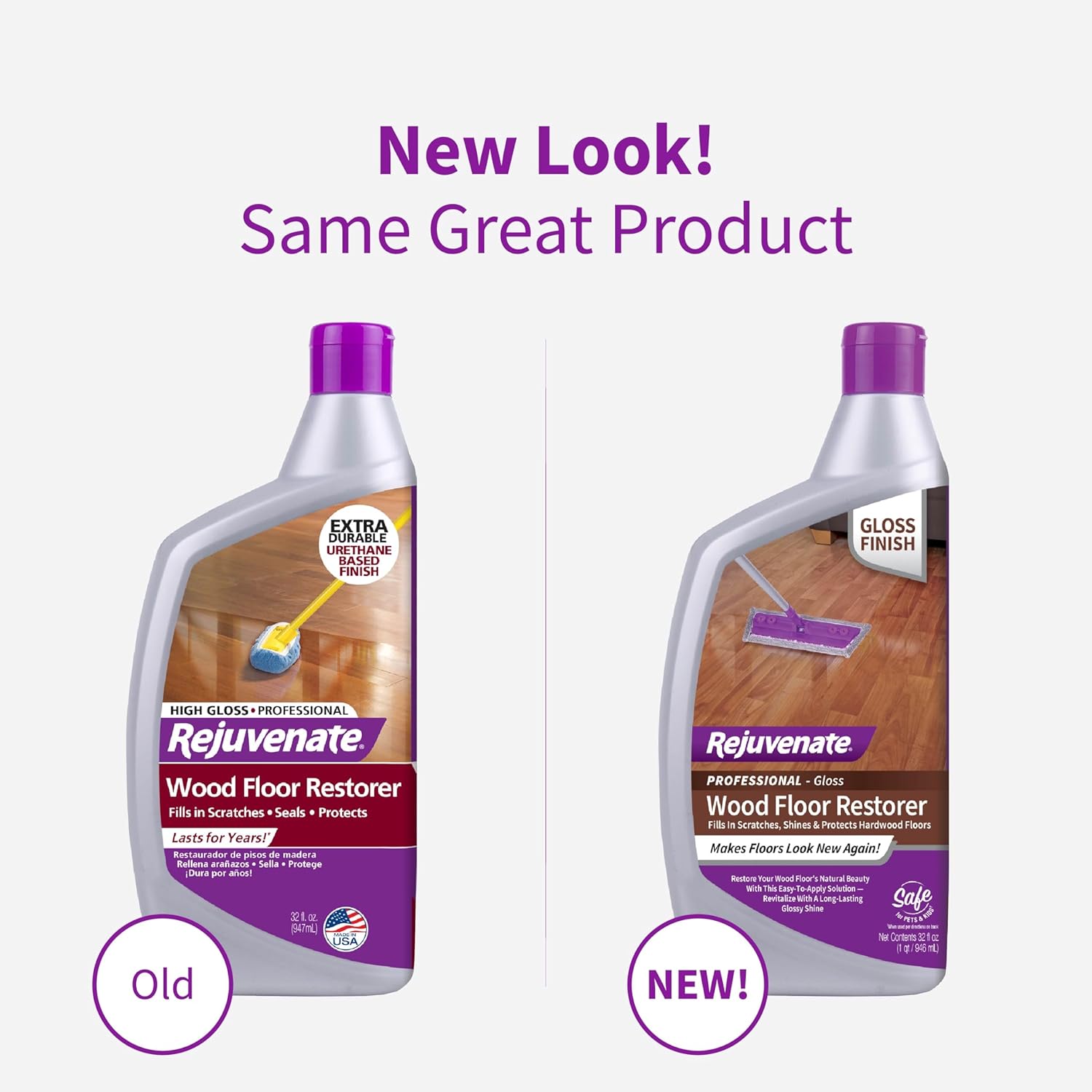
A floor restorer — products like Bona Hardwood Floor Polish, Rejuvenate All Floors Restorer, and Minwax Hardwood Floor Reviver are among the most reviewed consumer options — is not a finish. It does not sand, strip, or bond chemically to bare wood. What it does is deposit a thin acrylic or polymer wear layer over an existing finish, filling in micro-scratches that scatter light and create the “dull” look, and adding a modest amount of surface protection.
The distinction matters because restorers only work if the existing finish is clean, intact, and compatible. Per the NWFA’s Consumer Guide, the two most common failure modes are:
-
Applying a restorer over a wax-finished floor. Older floors (pre-1970s installation, or any floor that’s been waxed by a previous owner) have a wax surface that prevents polymer products from bonding. A restorer applied to wax will peel within weeks. The test: rub a white rag with mineral spirits on an inconspicuous spot. If wax transfers to the rag, you have a wax finish.
-
Applying a restorer without stripping cleaning-product buildup. Residue from oil soaps (Murphy’s Oil Soap is a common culprit), silicone-based sprays, and even some “hardwood floor cleaners” leaves a film that blocks bonding. Fine Woodworking’s guide to wood finishes notes that silicone contamination in particular is nearly impossible to reverse without abrasion — it’s why professional finishers test every floor before a buff-and-recoat.
The prep step almost every consumer skips: clean the floor with a pH-neutral hardwood floor cleaner (Bona Hardwood Floor Cleaner and Basic Coatings Street Shoe Cleaner are frequently cited by flooring contractors), let it dry fully, and do a bond test in a closet before committing to the whole floor.
By the numbers
- Restorer products: $0.15–$0.40/sq ft in materials (DIY)
- Buff-and-recoat (professional): $1.00–$2.50/sq ft
- Full sand-and-refinish (professional): $3.00–$8.00/sq ft, 2026 contractor rates
- A 400 sq ft living room: restorer costs ~$60–$160 in product vs. $1,200–$3,200 for a full refinish
The Buff-and-Recoat Option: Between Restorer and Refinish
If the water-drop test shows breached finish in multiple areas, or if the restorer bond test fails, the next step up is a buff-and-recoat — also called a screen-and-recoat. This process uses a buffer fitted with a maroon abrasive pad (not a belt or drum sander) to scuff the existing finish just enough to give a new coat of polyurethane mechanical adhesion. It removes almost no wood — typically less than 1/1000 of an inch — and resets the surface.
This Old House’s refinishing guide recommends buff-and-recoat for floors that have lost their sheen, show light to moderate finish scratches, or have been dulled by years of cleaning residue, but have structurally sound finish with no peeling, cupping, or deep wood damage. It extends the life of a floor by 3–5 years between full sands.
Critical limitation: Buff-and-recoat cannot fix color inconsistencies, stains in the wood, deep scratches, or finish that is flaking off in sheets. Attempting to recoat over failing finish just traps the failure beneath a new layer — it will peel faster than if you had started with bare wood.
Matching the finish type
This is where intermediate practitioners get burned: recoating with the wrong finish chemistry.
- Oil-based polyurethane over water-based polyurethane — generally won’t bond; the oil-based won’t cure properly over a water-based film.
- Water-based over oil-based — can work with proper scuffing and adhesion primer, but requires careful testing.
- Anything over aluminum-oxide factory finish (the finish on most prefinished engineered and solid hardwood sold since the late 1990s) — recoats rarely bond well; aluminum oxide is extremely hard and resistant to abrasion. Per the NWFA, these floors typically need full replacement rather than refinish when they reach end of finish life.
If you don’t know what finish is on the floor, the Bob Vila editorial guide suggests sanding a hidden area with 220-grit and noting the color of the dust: oil-based poly produces yellowish dust; water-based produces white or clear dust.
Species and Hardness: Why This Changes Your Repair Options
One variable that almost every consumer restorer guide glosses over: the Janka hardness of your wood species affects how quickly it re-scratches after a topical repair.
Janka hardness is a rating that measures how much force (in pounds-force) it takes to embed a steel ball halfway into a wood plank — it’s the standard index for scratch and dent resistance. White oak, the dominant flooring species in the premium residential market right now, rates around 1,360 lbf. Brazilian cherry (Jatoba) comes in at 2,350 lbf. American cherry sits at a relatively soft 950 lbf.
Why it matters for repair: if you restore a soft species like American cherry or walnut (1,010 lbf) with a standard water-based acrylic restorer, the thin polymer layer is the hardest thing on the floor. It will protect adequately on a low-traffic bedroom but scratch visibly faster on a hallway or kitchen. Apartment Therapy’s buyer’s guide on floor restorers notes that reviewer satisfaction drops sharply when restorer products are used on soft species in high-traffic zones — the new layer scuffs within months.
For softer species in high-traffic areas, the better option is a buff-and-recoat with a commercial-grade water-based finish (Bona Traffic HD and Loba 2K Invisible are both frequently cited by flooring contractors for durability) rather than a topical restorer. The film thickness and cross-link density of a real finish coat outperforms any restorer product.
The Decision Framework: If X, Then Y
After the diagnostics, the decision tree is actually simple:
If the finish is intact (water beads up) and the floor is just dull or lightly scratched: → Clean with pH-neutral cleaner, do a bond test, apply a restorer product. Budget $60–$160 in materials for a standard room. Re-apply annually in high-traffic areas.
If the finish is lightly breached in spots but structurally sound overall: → Fill individual wood scratches with a color-matched scratch repair pen or wax fill stick, then apply a restorer over the whole floor. This is the maximum scope of a DIY topical repair.
If the finish is dull across the whole floor but structurally sound (no peeling, no wax history): → Buff-and-recoat. This is a professional job unless you have buffer experience — an aggressive pass with the wrong pad on a soft species can burn through finish unevenly. Get at least two contractor quotes; 2026 rates in most metros run $1.00–$2.50/sq ft.
If the finish is peeling, heavily worn through to bare wood in traffic lanes, or the floor has been waxed: → Sand-and-refinish is the only real option. Don’t pour money into topical products that will fail within weeks.
If the floor is prefinished engineered hardwood or solid hardwood with an aluminum-oxide factory finish: → Skip the restorer aisle and call a flooring dealer first. Many prefinished floors can’t be recoated at all; your money is better spent understanding when replacement makes sense.
The floors that reward patience and proper diagnostic work are the same ones worth protecting: premium solid white oak, hand-scraped walnut, site-finished cherry. Getting the repair tier right — restorer, recoat, or refinish — is exactly the kind of decision that separates a floor that lasts another decade from one that gets sanded unnecessarily or, worse, coated over a failing foundation and has to be redone in eighteen months.