You’ve chosen a wood floor — maybe wide-plank European white oak, maybe hand-scraped walnut, maybe something more exotic like ipe brought indoors. Now comes the finish decision, and if you’ve been researching for more than twenty minutes you’ve already hit the three names that dominate the oil-finish category: Rubio Monocoat, OSMO Polyx-Oil, and plain tung oil. An oil finish works differently from the polyurethane coating most people picture: instead of building a hard film on top of the wood, oil penetrates into the fiber itself, hardening from within and leaving the grain visible and tactile. The result looks alive rather than laminated. The tradeoff is that oil-finished floors need periodic maintenance — typically a light re-oiling every one to three years — and they behave very differently depending on which wood species is underneath them. That species-finish interaction is exactly where most buyers make a costly mistake. This guide breaks down what each product actually does, where each one wins, and which wood types will punish you for choosing wrong.
What You’re Actually Buying: How These Three Oils Work
Before comparing products, it helps to understand the chemistry at a high level, because it explains most of the performance differences downstream.
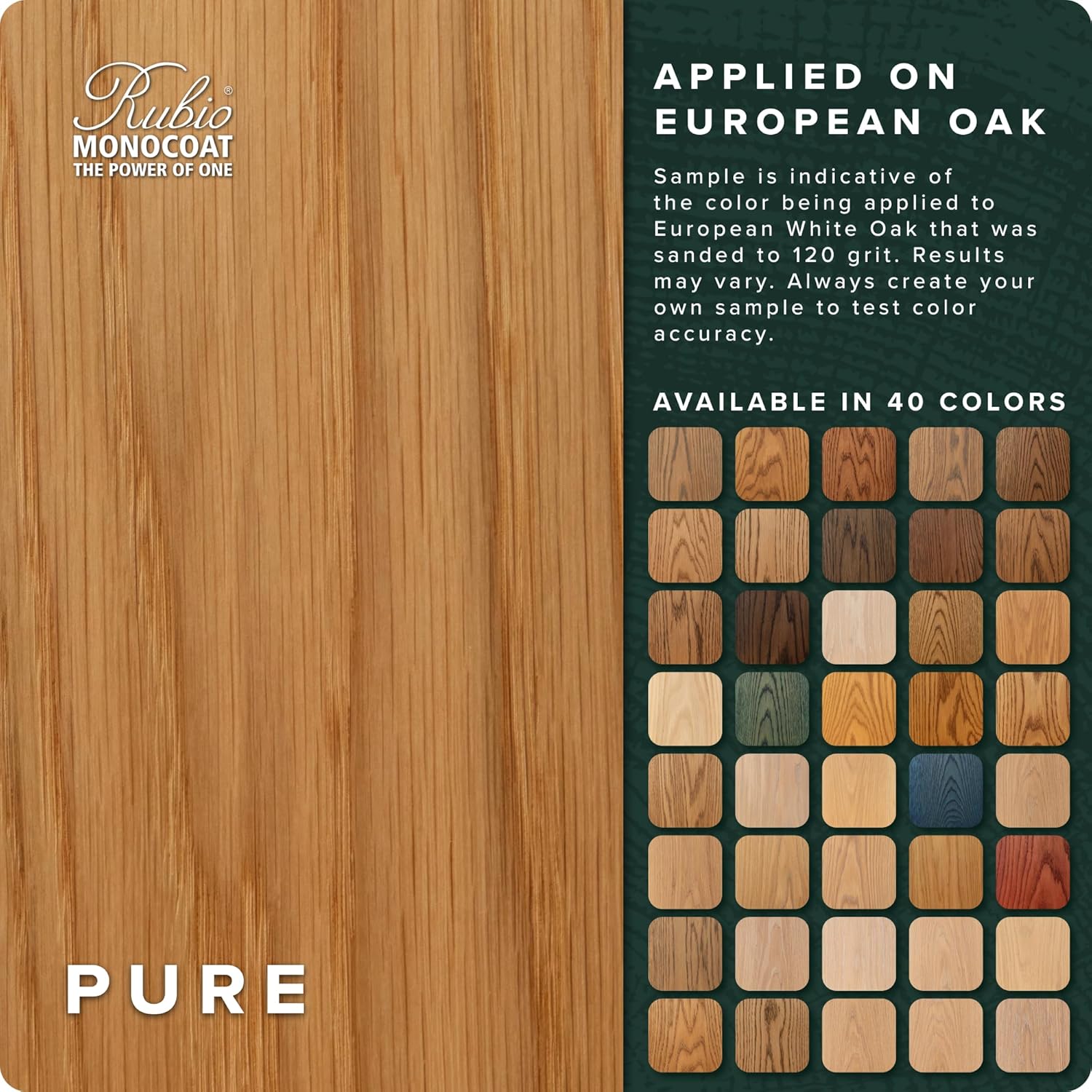
Rubio Monocoat Oil Plus 2C is a single-coat reactive oil. It bonds at the molecular level to wood fibers — the idea being that one coat saturates the surface fully, and additional coats simply sit on top unabsorbed. It is zero-VOC (VOC = volatile organic compound, the airborne chemicals that make many finishes smell and require ventilation) and cures in roughly five to seven days to full hardness. Per the Rubio Monocoat Oil Plus 2C Application Guide, 2025 edition, the “2C” designation refers to a two-component system: the oil itself plus a small accelerator that cuts cure time significantly and improves hardness ratings.
OSMO Polyx-Oil is a German-engineered blend of plant-based oils — sunflower, soybean, and thistle — combined with waxes. It is not a single-coat system; most applications require two coats. OSMO’s wax content gives it a slight surface presence that bridges the gap between a pure penetrating oil and a film finish. According to the OSMO Polyx-Oil Technical Data Sheet, 2025 edition, the product is rated for residential and commercial use, with a pendulum hardness score meaningfully higher than most single-oil finishes. Its VOC rating is higher than Rubio’s but still far lower than solvent-based polyurethane.
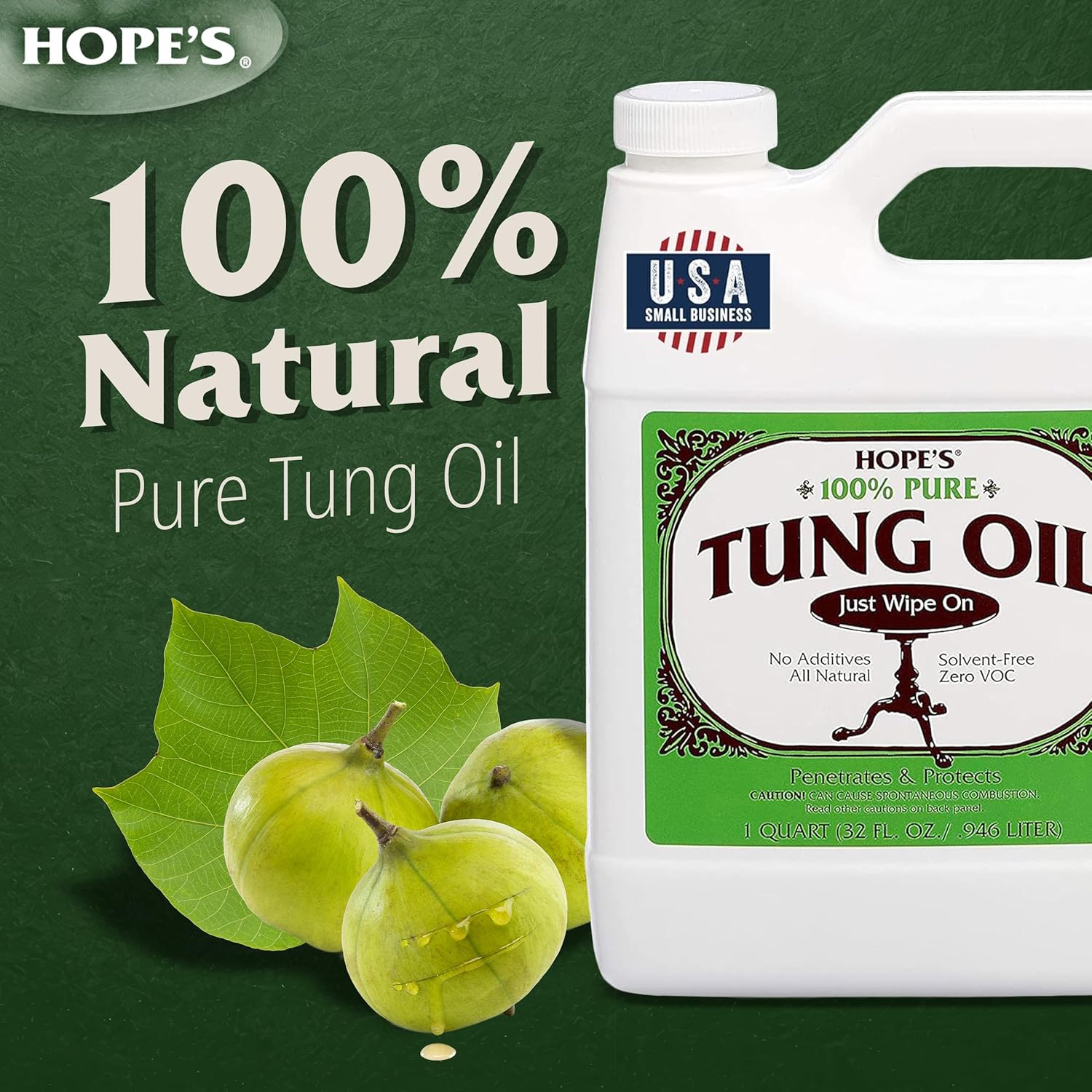
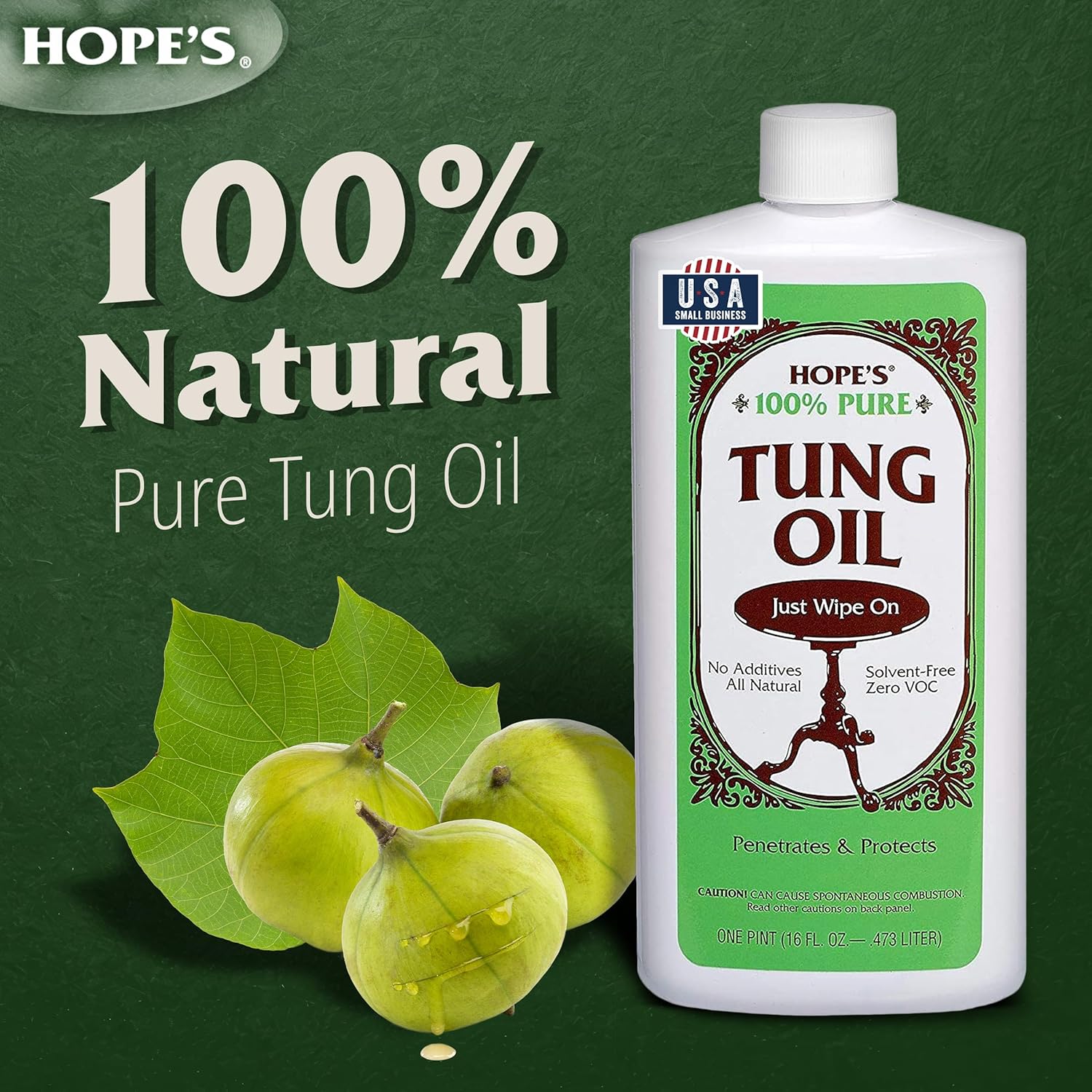
Pure tung oil — the real thing, pressed from the tung tree nut, not “tung oil finish,” which is typically a blended product containing very little actual tung — is the oldest and most traditional of the three. It penetrates deeply, dries slowly, and builds no surface film at all. It typically requires three to five thin coats, each allowed to cure 24–72 hours before the next. Fine Woodworking’s archive on oil finishing consistently notes that pure tung oil’s slow cure cycle is its biggest practical liability on floors, but also that its depth of penetration makes it unmatched on very porous or figured woods where other oils can blotch.
The Species Matrix: Where Each Finish Wins and Loses
The behavior of any oil finish is a function of two wood variables: extractive content (the natural resins, silica, or oils already present in the wood) and porosity (how open the grain structure is). High-extractive species like teak, ipe, and wenge will actively resist oil absorption. Highly porous species like white oak or ash drink oil fast and can streak or blotch if the applicator isn’t careful. The three head-to-head comparisons below are structured by species tier, from the most oil-friendly to the most demanding.
White Oak: The Oil-Finish Sweet Spot
White oak is the dominant species in the premium floor market right now. Its open, ray-fleck grain — the ray fleck being the silver-grey medullary ray pattern visible when the log is quartersawn, meaning the growth rings run roughly perpendicular to the face — is almost purpose-built for penetrating oil.
Rubio Monocoat Oil Plus 2C on white oak performs excellently. The single-coat system works because white oak’s porosity is consistent: the oil saturates evenly, the ray fleck takes on its characteristic silver-grey luminosity, and the cure is predictable. Owners of Rubio-finished white oak floors consistently report a “stone-like” tactile quality that polyurethane cannot replicate.
OSMO Polyx-Oil on white oak also performs very well. Its added wax content gives slightly better initial scuff resistance — a real advantage in high-traffic zones. Between the two on white oak, OSMO’s edge is durability; Rubio’s edge is appearance depth.
Pure tung oil on white oak is viable but requires patience. Three coats minimum, and the slow cure cycle on a floor installation is a logistical headache relative to the reactive oils. This Old House’s editorial guide on floor finishes advises that any oil-finished floor typically requires the space to be vacated for 48–72 hours minimum during cure, with full hardness at seven days — a timeline that compounds with every additional tung oil coat.
OSMO
$59.99
In stock on Amazon
Check price on AmazonWalnut and Wenge: Mid-Tier Complexity
These two species are grouped together not because they perform alike, but because both require more applicator attention than white oak and both illustrate how product choice can rescue or ruin a finish.
American black walnut has moderate extractive content and a closed, smooth grain. It is forgiving to finish but prone to raising grain if too much moisture is introduced by a water-carried product. Rubio Monocoat can cause very slight grain raise on walnut if surface prep isn’t immaculate — the 2025 application guide recommends sanding to 120-grit, not finer, to maximize absorption. OSMO, being oil-and-wax rather than water-carried, is marginally safer on walnut for less-experienced applicators. Tung oil on walnut is a classic pairing: Fine Woodworking’s finishing archive describes it as one of the most reliable combinations in the craft, noting that the oil darkens walnut beautifully without the orange cast that some linseed-based products produce.
Wenge is a designer darling — near-black grain with dramatic figure — and a finishing challenge. Its interlocked grain and high extractive content mean that almost every finish faces adhesion difficulty. OSMO Polyx-Oil has the best track record on wenge of these three options, largely because the wax component provides some mechanical grip that pure penetrating oils lack. Rubio on wenge produces inconsistent results in aggregated installer reports — some installations look extraordinary; others show patchiness. Pure tung oil on wenge is not recommended for floors; the cure cycle is too slow relative to foot-traffic timelines on a newly finished floor.
HOPE'S
$29.99
In stock on Amazon
Check price on AmazonTeak, Ipe, and Hard Maple: Where Oil Finishes Struggle
This tier covers species where penetrating oils face their most significant limitations, either because of extreme extractive content or extreme density.
Teak and ipe are both extremely high in silica and natural oils. The Forest Stewardship Council’s guidance on tropical species for interior applications notes that the surface of teak and ipe must be solvent-wiped before any finish application — the natural oils that make these species dimensionally stable also prevent adhesion. The Rubio Monocoat Oil Plus 2C Application Guide explicitly warns that high-oil species require a degreasing step and that single-coat coverage is harder to achieve on teak; a second thin coat is frequently necessary in practice. OSMO faces the same adhesion challenge. Both products will perform acceptably after proper prep, but “acceptable” on teak and ipe is a harder standard than on oak. Pure tung oil on teak is largely counterproductive — the surface oils block penetration so effectively that the tung oil bonds to the existing surface oils rather than to the wood fiber. If teak or ipe is your species, the honest answer is that a reactive oil finish is a compromise; hard-wax oil systems with specific adhesion formulations are worth investigating before committing.
Hard maple presents the opposite problem: it is too closed-grained to absorb oil reliably. Hard maple carries a Janka hardness — the resistance to denting, measured by the force required to embed a steel ball halfway into the wood — of around 1,450 lbf, and its grain is so tight that oil sits on the surface rather than penetrating. Wood Magazine’s comparative feature on oil versus polyurethane floor finishes states flatly that penetrating oils are poorly suited to hard, closed-grain species. If you have hard maple and want an oil aesthetic, you’re looking at a hard-wax oil system formulated specifically for dense species. Rubio Monocoat makes a dedicated Hard Wax variant for this application, but it is a categorically different product from the Oil Plus 2C reviewed here.
HOPE'S
$17.99
In stock on Amazon
Check price on AmazonBy the Numbers
| Species | Rubio Monocoat | OSMO Polyx-Oil | Pure Tung Oil |
|---|---|---|---|
| White Oak | ★★★★★ | ★★★★☆ | ★★★☆☆ |
| Walnut | ★★★★☆ | ★★★★★ | ★★★★★ |
| Wenge | ★★★☆☆ | ★★★★☆ | ★★☆☆☆ |
| Teak / Ipe | ★★★☆☆ † | ★★★☆☆ † | ★★☆☆☆ |
| Hard Maple | ★★☆☆☆ | ★★☆☆☆ | ★☆☆☆☆ |
† Mandatory degreasing prep step required per manufacturer documentation before application.
Cost Reality and Application Overhead
As of mid-2026, Rubio Monocoat Oil Plus 2C retails at approximately $90–$110 per 1.3-liter unit, which the manufacturer rates for 200–270 sq ft on a normally prepared surface. OSMO Polyx-Oil (3032 satin) runs roughly $80–$100 per liter, but because two coats are standard, your effective cost-per-square-foot is comparable to Rubio or slightly higher. Pure tung oil from reputable suppliers runs $30–$50 per quart, but the three-to-five-coat requirement on floors erodes that apparent price advantage substantially — and the extended cure cycle between coats means the labor cost compounds as well.
The hidden cost is application labor and scheduling. This Old House’s editorial guide on floor finishes notes that oil-finished floors typically require the space to be vacated for 48–72 hours minimum during cure, with full hardness at seven days. For a renovation project where sequencing matters, Rubio’s accelerated cure — driven by the 2C component — is a real schedule advantage over pure tung oil’s extended dry cycle. OSMO’s two-coat system sits in the middle: longer than Rubio, faster than tung oil.
The Decision Rule
Match the finish to the wood first, then optimize for your priorities within that constraint.
White oak: Rubio Monocoat Oil Plus 2C is the default recommendation — best appearance, easiest single-coat application, fastest cure. If durability in a high-traffic zone outweighs pure aesthetics, OSMO Polyx-Oil’s wax content earns its extra coat.
Walnut: OSMO and tung oil are both strong. Tung oil is the choice if you’re patient and want the deepest natural look. OSMO is the choice if you’re on a timeline or less experienced with grain raise.
Wenge: Weight OSMO over Rubio. Do not skip the surface preparation step regardless of which product you use.
Teak or ipe: Solvent-wipe before anything, and investigate hard-wax oil systems designed for high-extractive tropical species before defaulting to any of the three products above.
Hard maple: Stop here and research hard-wax oil systems designed for closed-grain species. None of the three products reviewed in this article will give you a satisfying, durable floor on hard maple.
The oil finish category rewards specificity. The worst outcome is buying the best-reviewed product on a general forum and applying it to the wrong species — which is exactly how you end up with a patchy, under-penetrated floor that needs to be sanded back in eighteen months. The chemistry is not forgiving of mismatches, and the prep step is never optional.