You spent real money — maybe $12 to $20 a square foot for wide-plank European white oak, or a premium hand-scraped walnut — and the last thing you want is the wrong cleaner quietly eating through the finish. A finish is the protective coating that sits on or inside the wood’s surface, shielding it from moisture, abrasion, and staining. The two dominant categories you’ll encounter in premium flooring are polyurethane (often called “poly”), a hard plastic-like film that sits on top of the wood, and penetrating oil, a treatment that soaks into the wood fibers and cures there, leaving little to no surface film. Those two architectures protect differently, breathe differently, and fail differently — which means they demand completely different cleaning protocols. Get them swapped, and you’re not just cleaning poorly; you’re actively degrading the finish. This guide walks you through how to identify which finish you have, then delivers a precise, decision-ready protocol for each.
| EDITOR'S PICK[Bona Professional Series Natura…](https://www.amazon.com/dp/B001TJKEFC?tag=greenflower20-20) | Mid-tier[Howard Products Beeswax Wood Po…](https://www.amazon.com/dp/B000E62HFQ?tag=greenflower20-20) | Budget pick[Quick Shine Hardwood Floor Lust…](https://www.amazon.com/dp/B00PJQPV72?tag=greenflower20-20) | |
|---|---|---|---|
| Cleaner Type | Hardwood Floor Cleaner | Polish & Conditioner | Luster-Polish |
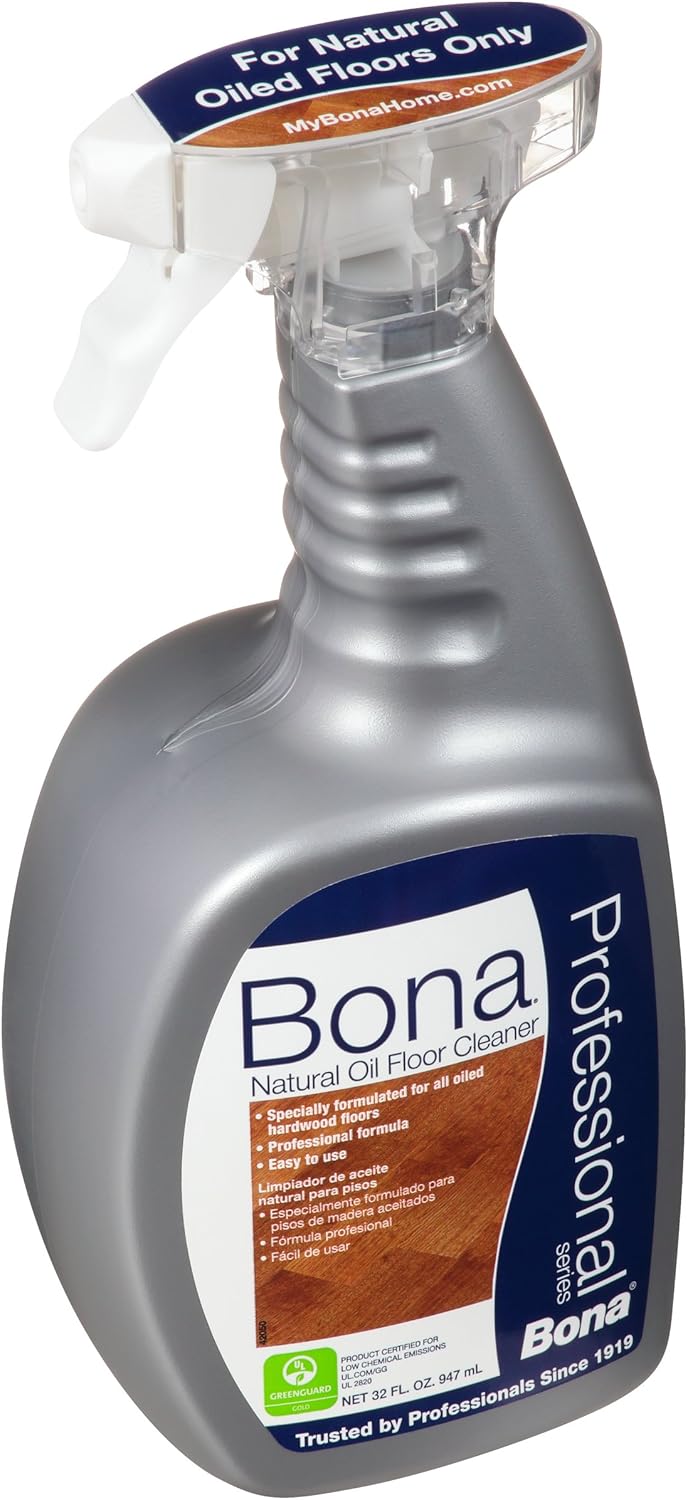
| Finish Compat. | Oil Finish | — | — |
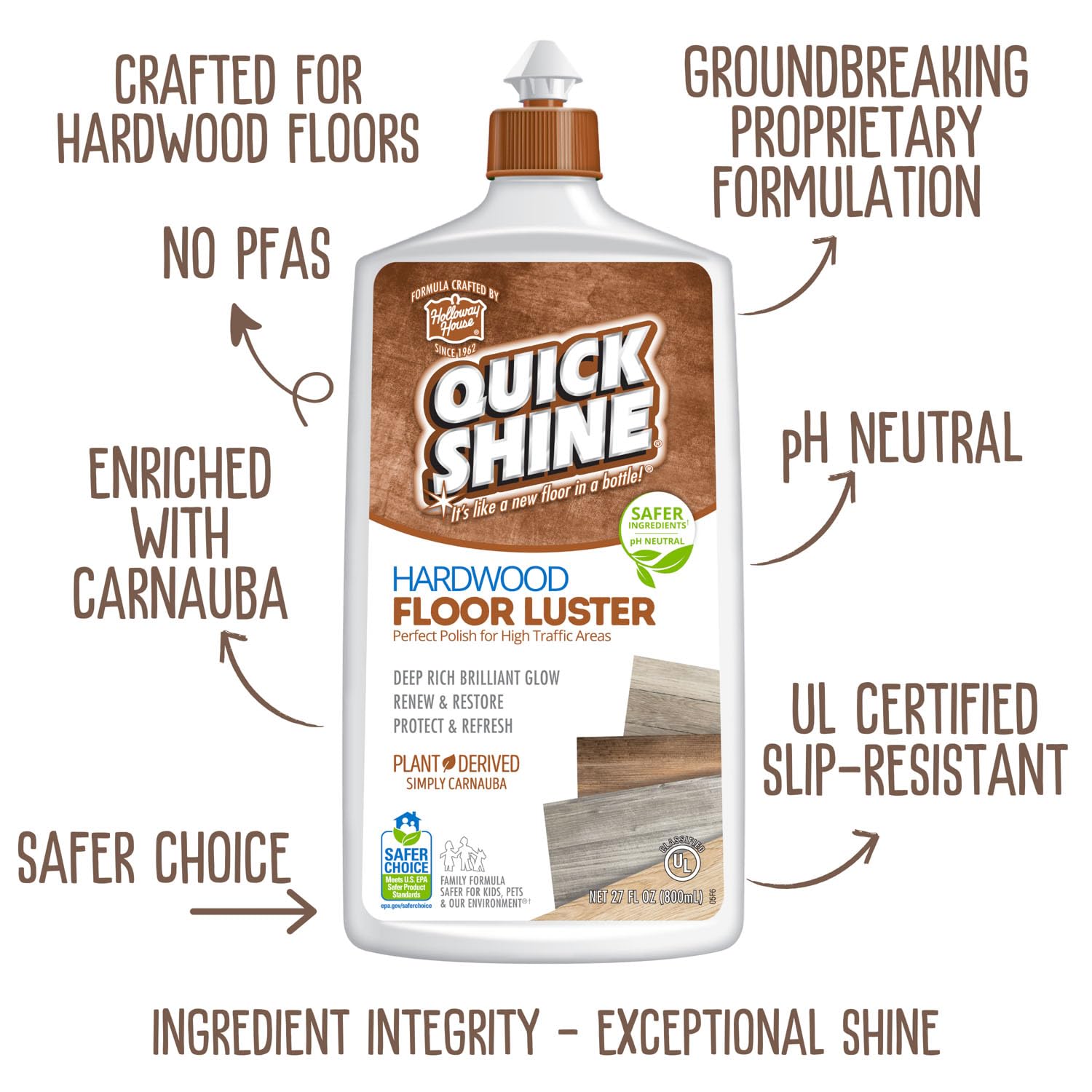
| Ingredients | — | Beeswax | Plant-derived w/ Carnauba |
| Size | 32 fl oz | 16 fl oz | 27 fl oz |
| pH Neutral | — | — | ✓ |
| Ready to Use | — | — | ✓ |
| Price | $19.96 | $11.48 | $8.17 |
| See on Amazon → | See on Amazon → | See on Amazon → |
How to Tell Which Finish You’re Standing On
Before you touch a mop, you need to know your finish type. This isn’t guesswork — there are two fast field tests practitioners use.
The water drop test. Put a small drop of water in an inconspicuous spot and watch what happens in 60 seconds. If the water beads and sits on a glassy surface without any color change, you almost certainly have a surface film finish — polyurethane, aluminum oxide coating, or a similar hard topcoat. If the water is absorbed and leaves a dark spot or ring within a minute, the wood is drinking it in, which is characteristic of an oil-finished or minimally finished floor.
The scratch test. Find a low-traffic edge — inside a closet, behind a door — and run a coin lightly across the surface. A polyurethane finish will show a white scratch mark in the coating itself, separate from the wood. An oil finish will show the wood fiber directly, often with a slightly different sheen.
If you’re still uncertain, check your original purchase documentation. Suppliers like Carlisle Wide Plank Floors and Rubio Monocoat dealers will have specified the finish in writing, and that spec sheet is worth locating before establishing any maintenance routine. According to the National Wood Flooring Association, Hardwood Floor Care & Maintenance Guide (2024 edition), misidentifying finish type is among the most common causes of premature finish failure — and the damage is often irreversible without a full resand.
Cleaning a Poly-Finished Floor: The Protocol That Protects the Film
Polyurethane — whether oil-based or water-based — cures into a continuous surface film. Think of it as a layer of hardened plastic laminated to the top of your wood. That film is impressively durable against abrasion, but it has specific chemical vulnerabilities.
What Wrecks a Poly Finish
Excessive water is the leading threat. Water that sits in the seams between planks migrates under the film, causing delamination and cupping, where plank edges rise above the center. This Old House’s editorial guide How to Clean Hardwood Floors is emphatic on this point: damp-mopping means a nearly dry mop, not a wet one.
Ammonia and bleach are common in multi-surface cleaners and both will cloud, craze, or dull a polyurethane film over repeated use. Apartment Therapy’s 2025 roundup The Best Hardwood Floor Cleaners, Tested by Our Editors consistently flags ammonia-based formulas as incompatible with poly finishes.
Wax and oil-based products applied to a polyurethane floor don’t condition anything — the film prevents penetration — and instead leave a slippery, residue-prone buildup that becomes difficult to strip.
Steam mops force moisture and heat through seams simultaneously. Most polyurethane finish manufacturers explicitly void warranty coverage when steam mops are used.
The Poly Cleaning Sequence
- Dry sweep or vacuum daily in high-traffic zones. Grit acts as sandpaper under foot traffic, abrading the film. Use a soft-bristle attachment; beater bars damage the finish surface.
- Damp mop weekly or bi-weekly with a pH-neutral, hardwood-specific cleaner. Bona’s Hardwood Floor Cleaner is widely specified here — Bona AB’s product specification sheets (2025) confirm it is pH-neutral and formulated specifically for cured polyurethane and aluminum oxide finishes.
- Never let standing water linger. Wring the mop until it’s barely damp. If water is visible on the surface after mopping, you’ve used too much.
- Deep clean quarterly with the same pH-neutral formula; no strippers, no all-purpose cleaners.
Quick
$8.17
In stock on Amazon
Check price on Amazon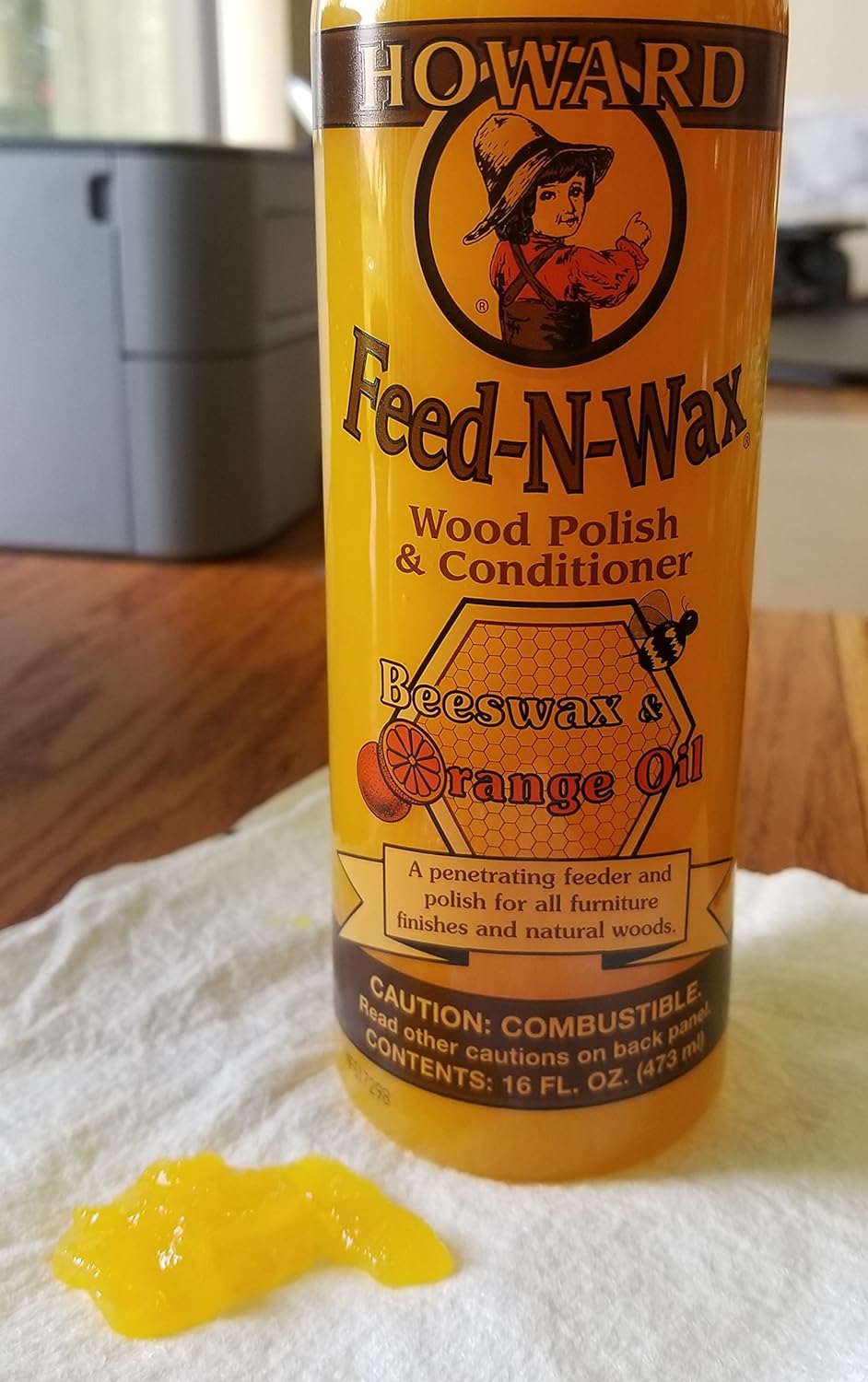
Howard
$11.48
In stock on Amazon
Check price on AmazonRefresh vs. Refinish on a Poly Floor
A poly floor that has lost its sheen in high-traffic areas can sometimes be screened — lightly abraded — and recoated without a full resand, but only if the film is intact and you haven’t contaminated it with wax or incompatible products. If you have, a full mechanical strip is required before recoat adhesion is possible. The National Wood Flooring Association, Hardwood Floor Care & Maintenance Guide (2024 edition), notes that wax contamination is one of the most frequently cited reasons a screen-and-recoat fails to bond properly.
Bona
$19.96
In stock on Amazon
Check price on AmazonCleaning an Oil-Finished Floor: The Protocol That Feeds the Wood
Oil finishes — Rubio Monocoat, Osmo Polyx-Oil, Woca, Loba, and similar hardwax-oil systems — work by impregnating the wood fibers rather than forming a surface film. The finish lives in the wood rather than on it. This produces the matte, natural look that has become a signature of European-influenced interiors and is standard on many premium wide-plank floors. The trade-off is a finish that requires periodic replenishment and is sensitive to a completely different set of threats.
What Wrecks an Oil Finish
Film-forming cleaners are the primary danger. Any cleaner that leaves a residue — most spray-and-shine products, many commercial floor cleaners — will deposit a film on a surface that was never meant to carry one. That film prevents the wood from being re-oiled properly during maintenance, trapping moisture unevenly and creating blotchy, gray areas over time.
Alkaline cleaners will saponify, or chemically break down, the cured oil, essentially reversing the polymerization that makes the finish durable. Fine Woodworking’s archive coverage of oil finishes explains this chemistry directly: cured penetrating oils are esters that hydrolyze under alkaline conditions, meaning a high-pH cleaner is not just ineffective but actively destructive.
Over-wetting is dangerous here too, though for a different reason than on poly floors. Without a film to repel moisture at the surface, water penetrates immediately, and repeated exposure causes graying and raised grain.
Generic wood floor cleaners formulated for poly represent the most common mismatch in the field. If a cleaner doesn’t explicitly state compatibility with penetrating oil or hardwax-oil finishes, assume it is not compatible.
The Oil Floor Cleaning Sequence
- Dry sweep or vacuum daily. The same grit-management logic applies as with poly floors.
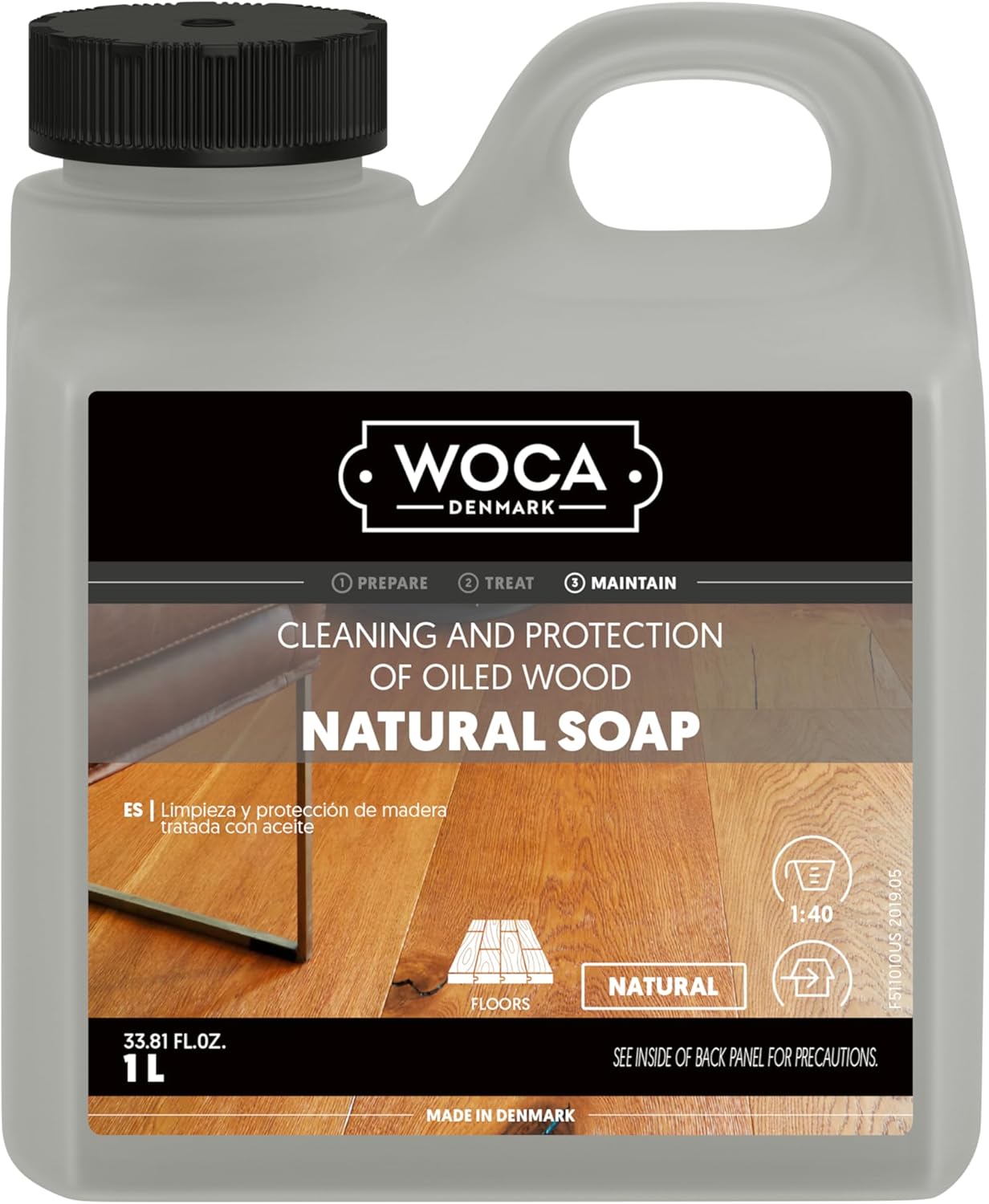
- Damp mop with a cleaner designed specifically for oil-finished floors. Rubio Monocoat’s Universal Cleaner and Woca’s Soap products are formulated to clean without leaving residue and to leave the finish chemistry intact. Bona AB also produces a dedicated hardwood cleaner for oil-finished surfaces — verify you are using the correct product, as the formulas differ in pH and surfactant composition according to Bona AB’s 2025 product specification sheets.
- Re-oil high-traffic areas annually, or more frequently in commercial-grade wear zones. This is the defining maintenance requirement that poly floors do not share. Rubio Monocoat’s technical data sheet for Oil Plus 2C (2024) recommends a single-coat maintenance application to worn areas as a standard annual protocol, using a white pad on a low-speed buffer for even penetration.
- Spot repair individual boards without the seam or color-matching challenges a poly floor refinish involves. A scratched or water-stained oil-finished board can often be sanded, re-oiled, and blended back into the floor without sanding the entire room.
Quick
$8.17
In stock on Amazon
Check price on AmazonHoward
$11.48
In stock on Amazon
Check price on AmazonThe Re-Oiling Calculus
Re-oiling is not optional on a hardwax-oil floor — it is the entire maintenance model. Rubio Monocoat’s technical data sheet for Oil Plus 2C (2024) specifies approximately 215 to 430 square feet of coverage per liter for maintenance recoating, depending on wood species and porosity. At current specialty dealer pricing, annual maintenance oil for a 500 square foot floor runs roughly $40 to $80 in product. Compare that to a full resand and recoat on a poly floor: This Old House’s editorial resources on hardwood refinishing indicate that professional refinishing can run $3 to $6 per square foot in labor and materials — a meaningful difference over the life of a floor.
Bona
$19.96
In stock on Amazon
Check price on AmazonSide-by-Side Comparison: Where the Protocols Diverge
The table below maps each decision point across both finish types. Read across a row to find the right action for your floor.
| Decision point | Poly-finished | Oil-finished |
|---|---|---|
| Cleaner pH target | Neutral (6–8) | Slightly acidic to neutral (5–7); avoid alkaline |
| Water exposure | Minimal damp mop; no standing water | Minimal damp mop; no standing water |
| Wax or oil products | Never — builds incompatible residue | Required annually for replenishment |
| Steam mop | Never | Never |
| Spot repair difficulty | High — recoat adhesion requires prep | Low — sand and re-oil individual boards |
| Refresh without full resand | Possible if film is intact | Yes — re-oiling is the standard protocol |
Quick
$8.17
In stock on Amazon
Check price on AmazonApartment Therapy’s 2025 roundup The Best Hardwood Floor Cleaners, Tested by Our Editors found that readers consistently over-applied cleaner on both finish types, leading to residue buildup that required correction — a problem the editorial team traced directly to unclear product labeling around finish compatibility.
Howard
$11.48
In stock on Amazon
Check price on AmazonFine Woodworking’s archive on oil finishes reinforces that the chemistry gap between these two finish categories is not a matter of degree but of kind: a product optimized for one will work against the other at the molecular level, not merely underperform.
Bona
$19.96
In stock on Amazon
Check price on AmazonThe Decision Frame: If X, Then Y
If your floor has a glossy or satin surface-film finish — water beads, scratch shows white coating separate from wood — use a pH-neutral, hardwood-specific cleaner. Bona AB’s Hardwood Floor Cleaner is the most widely specified option and the safest default, per Bona AB’s 2025 product specification documentation. Never introduce oil, wax, or steam. Plan for a screen-and-recoat every five to eight years in residential use, or when the finish shows wear-through in traffic lanes.
If your floor has a matte, natural look with visible wood texture and water absorbs quickly, you have an oil finish. Match your cleaner to the oil system used — ask your installer or check the original spec sheet. Rubio Monocoat, Osmo, Woca, and Loba each have brand-specific cleaners, and there are cross-compatibility reasons to stay within the same product family. Budget for annual maintenance oiling as a line item, not an afterthought. The payoff is a floor that can be partially repaired and refreshed indefinitely without ever touching a drum sander.
If you genuinely cannot identify the finish, test rather than guess. The water drop test costs nothing and takes 60 seconds. Alternatively, contact the installer or the original flooring supplier — any competent dealer who sold you a $15-per-square-foot floor will have the finish specification documented. The National Wood Flooring Association, Hardwood Floor Care & Maintenance Guide (2024 edition), recommends keeping finish documentation with home records for exactly this reason.
If you are pre-specifying a new floor and have not yet chosen a finish, the maintenance calculus is part of the value equation. Oil finishes demand more routine attention but offer easier spot repair and a more forgiving long-term refinishing path. Poly finishes are lower-maintenance day to day but require professional intervention once the film breaks down. Neither is objectively superior — but whichever you choose, your cleaning protocol is locked in from day one. Getting that protocol right from the start is the difference between a floor that ages gracefully and one that needs a full resand in year seven.