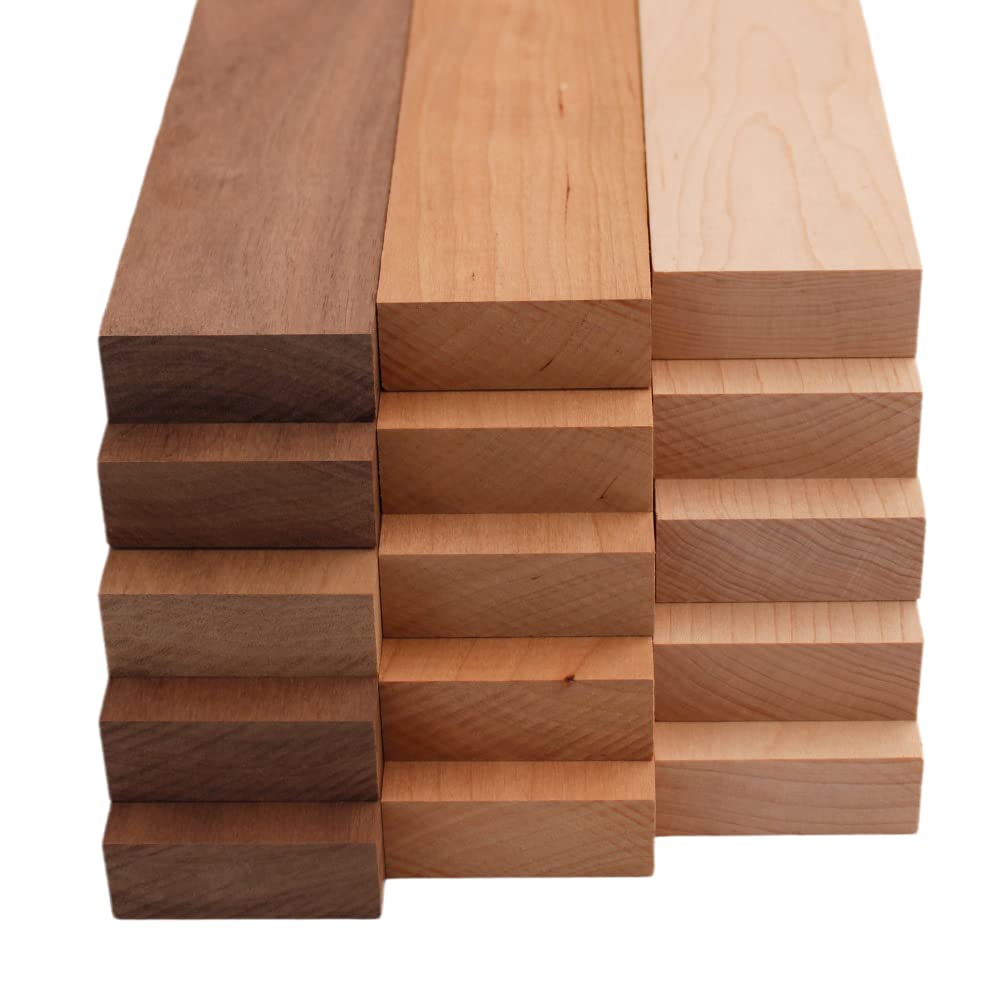
If you’ve ever stood in a lumber yard or scrolled through a specialty dealer’s online catalog and felt genuinely confused about whether to buy walnut, maple, or cherry for a project — you’re not alone. These three species are North America’s domestic workhorses, and they show up everywhere: kitchen cabinets, dining tables, wide-plank floors, and heirloom furniture. “Hardwood” simply means lumber milled from a deciduous (leaf-shedding) tree rather than a conifer like pine. Within hardwoods, species vary dramatically in color, hardness, workability, and price. A board-foot — the standard unit of lumber measurement, equal to a piece 12 inches wide, 12 inches long, and 1 inch thick — of figured black walnut can run four to five times the price of a comparable board of hard maple. Choosing wrong costs you money, time, and sometimes the whole project. This guide puts all three species on the same table so you can make the call with clarity.
The Core Trade-offs at a Glance
Before going species by species, it helps to have a shared framework. Three variables drive almost every buying decision:
Hardness (Janka rating): The Janka hardness test — named for Austrian engineer Gabriel Janka — measures how much force it takes to embed a steel ball halfway into a board. The number it produces is expressed in pound-force (lbf). Higher Janka = more resistant to dents and daily wear. This matters enormously for flooring and tabletops; it matters less for wall paneling or drawer boxes.
Working character: How a species behaves under hand tools and power tools — how cleanly it cuts, whether it blotches when stained, how forgiving it is for a practitioner still developing intuition.
Price and availability: At mid-2026 market rates, domestic hardwoods are moving in a tighter supply environment than they were in 2022–2023. Walnut demand has remained elevated from the renovation boom, cherry has recovered from a mid-decade soft patch, and maple is the most reliably available of the three. Prices cited here reflect current dealer benchmarks from specialty suppliers including Bell Forest Products, Hearne Hardwoods, and Woodworker’s Source.
By the Numbers
| Species | Janka Hardness | Typical FAS Price ($/bf, 2026) | Flooring $/sq ft |
|---|---|---|---|
| Black Walnut | 1,010 lbf | $12–$22 | $8–$16 |
| Hard Maple | 1,450 lbf | $5–$10 | $4–$9 |
| Black Cherry | 950 lbf | $7–$14 | $5–$11 |
FAS = “Firsts and Seconds,” the top NHLA lumber grade — meaning long boards with minimal defects. Figured or wide stock commands premiums above these ranges.
Black Walnut: The Premium Domestic Choice
Walnut is the species that converts buyers into believers. Its color — a deep chocolate brown with streaks of purple and gray in fresh-cut stock — photographs beautifully, resonates with mid-century and Japandi aesthetics, and ages toward a warmer medium brown over years of UV exposure. For many renovation clients, walnut is a destination purchase: they’ve budgeted for it specifically.
Hardness reality check: At 1,010 lbf Janka, walnut is softer than oak (1,290 lbf) and significantly softer than maple. That surprises most buyers. Per the Wood Database’s species profiles, walnut’s hardness is closer to cherry than to maple — meaning it dents from dropped cast iron or pet claws. For a high-traffic entryway floor, that’s a real trade-off. For a dining table, a home office desk, or a bedroom floor with moderate traffic, walnut’s softness is nearly irrelevant.
Workability: Walnut is widely regarded as one of the most cooperative domestic hardwoods to work. Fine Woodworking’s feature on domestic hardwood workability notes that walnut cuts cleanly, holds crisp detail at the router and chisel, and finishes well with both oil and film finishes. It glues reliably and moves moderately with seasonal humidity changes — meaning panels and tabletops are less prone to dramatic gapping or cupping than a more reactive species like flatsawn maple.
Finishing: Walnut is one of the few domestic species that doesn’t need stain to look premium. Its natural color is the finish story. Most professional furniture makers at shops sourcing from Hearne Hardwoods or Bell Forest Products apply a simple hardwax oil or a Danish oil finish to let the grain speak. If you’re buying walnut and planning to stain it, you’re likely wasting the species premium.
Where walnut earns its price: Statement furniture (dining tables, credenzas, bed frames), high-end flooring in bedrooms and offices, and custom cabinetry where the natural color contrast between walnut and lighter countertop materials does real design work. The figured premium — curly, crotch, or claro walnut — is significant, sometimes $30–$60/bf at specialty dealers, but produces results that no other domestic species can replicate.
Where it’s the wrong call: High-traffic commercial flooring, any surface that will see heavy abrasion, or budget-constrained projects where maple or cherry delivers 80% of the visual impact at 40–50% of the cost.
Hard Maple: The Workhorse With Hidden Depth
Hard maple (Acer saccharum — the sugar maple) doesn’t get the romantic press that walnut does, but professionals who work volume or prioritize long-term durability keep coming back to it. Its Janka hardness of 1,450 lbf makes it one of the hardest domestic species available, which is why it’s the standard for bowling alley lanes, butcher blocks, and gym floors. That hardness story translates directly to residential flooring with pets, kids, or significant foot traffic.
Color and grain: Fresh-cut maple is creamy white to light blond with a fine, even grain. It doesn’t have the dramatic color variation of walnut or the warm glow of cherry. That restraint is actually an asset for certain design directions — Scandinavian interiors, light contemporary spaces, and kitchens where the wood is meant to recede rather than dominate. Over time, maple develops a slight amber tone; it doesn’t darken as dramatically as cherry.
The figure question: Maple produces some of the most visually spectacular figure of any domestic species. Curly (also called “tiger”) maple, bird’s-eye maple, and quilted maple are found almost exclusively in hard maple and soft maple stocks. Woodworker’s Source and Bell Forest Products typically carry figured maple in the $15–$35/bf range depending on intensity of figure. If you’re building a guitar body, a jewelry box, or a furniture piece where figure is the centerpiece, maple is the domestic species to spec.
Finishing challenge: This is where maple tests practitioners. Maple’s dense, closed grain resists liquid stain poorly and blotches severely — meaning stain absorbs unevenly, producing a splotchy, amateur-looking result. Wood Magazine’s hardwood selection guides consistently flag this: if you want to stain maple, you need a pre-conditioner or a gel stain applied carefully, or you need to accept that natural maple with a clear finish is the better path. For painted cabinetry, maple is excellent — its tight grain takes paint crisply. For natural-finish furniture work where you want the wood to read as wood, lean on the light natural color or commit to a water-based finish that enhances without distorting.
Price reality: At $5–$10/bf for FAS grades at mid-2026 pricing, maple is the most accessible of the three species. For flooring, it competes directly with red oak — with the advantage of greater hardness and the disadvantage of less available color character. For cabinet shops running high volume, maple’s combination of workability, consistency, and price efficiency is hard to beat.
Where maple earns its place: Heavy-use flooring, butcher blocks and kitchen work surfaces, painted cabinetry, gym and utility spaces, and any project where figured stock will be the visual star.
Black Cherry: The Underrated Middle Ground
Cherry is the species that practitioners tend to appreciate more the second or third time they use it than the first. Its reputation is occasionally dismissed as “old-fashioned” — associated with Colonial Revival furniture and formal dining rooms. That dismissal misses what cherry actually does at maturity.
The patina argument: Black cherry (Prunus serotina) starts light: a pale pinkish-tan that some buyers find underwhelming when they first receive their boards. Over six to eighteen months of UV exposure, it transforms into a rich, warm amber-red that deepens steadily for years. Architectural Digest’s hardwood flooring overview describes this transformation as one of the most dramatic natural patinas available in domestic lumber. The tradeoff is that freshly installed cherry floors will not look like the sample you fell in love with — they’ll look lighter and slightly flat until the patina develops. This catches first-time cherry buyers off guard.
Workability: Cherry is widely considered the most pleasant domestic hardwood to work by hand. It cuts cleanly, planes smoothly, and has a fine, satiny surface right off the tool that requires minimal sanding. The Wood Database’s species profiles note that cherry’s moderate hardness (950 lbf Janka — slightly softer than walnut) means it’s not appropriate for the hardest-use flooring applications, but for furniture, cabinetry, and millwork, its working character is exceptional.
Finishing: Cherry finishes beautifully with oils, lacquers, and waterborne finishes, and unlike maple, it doesn’t blotch. It does have some susceptibility to blotching in certain grain patterns, but far less than maple. One finishing note from professional shops: cherry is sensitive to UV, which is what drives its patina — but that means protective UV-filtering finishes will slow the color development. Woodworkers who want the full patina effect often apply minimal finish and let the wood do its work.
Price and availability: At $7–$14/bf for FAS grades, cherry sits between maple and walnut on price — and represents genuinely good value for its workability and long-term aesthetics. Availability is solid across most specialty dealers. Wide, long boards are more available in cherry than in walnut at comparable price points, which matters for large tabletops or wide-plank flooring.
Where cherry earns its place: Furniture work where the long-term patina is part of the design intent, fine cabinetry where workability matters, millwork and trim work, and flooring in moderate-traffic spaces where the amber-red warmth at maturity is a design goal.
The Decision Rule: If X, Then Y
Here’s the plain version of what the species data actually says:
If durability and budget efficiency are primary — and especially if you’re flooring a kitchen, entryway, or any space with real traffic — spec hard maple. Accept that it needs to stay natural or painted. Don’t fight its finishing character.
If the wood is the centerpiece — a dining table, a bedroom floor, a credenza that people will touch and notice — and budget allows, spec walnut. Don’t stain it. Let it be itself. The softness trade-off is real but manageable in non-floor applications.
If you want walnut-level warmth on a cherry budget — and you can commit to a 12–18 month patina timeline — spec cherry. Buy it understanding that it will look different at year two than at installation, and treat that transformation as the feature, not the bug.
If figure is the point — a statement panel, an instrument body, a jewelry box — look at maple first, then walnut crotch or figured walnut. Cherry rarely figures dramatically enough to anchor a figure-forward project.
One practical note for practitioners with active specifications: the FSC-certified availability varies by species. Per the Forest Stewardship Council’s certified wood FAQ, all three domestic species are available with FSC chain-of-custody certification from responsible dealers — but verify at the dealer level before committing to a spec that requires certification documentation. Bell Forest Products and Hearne Hardwoods both maintain FSC inventory in these species, though stock levels shift seasonally.
The bottom line is that no single species dominates all three categories — hardness, workability, and visual impact — simultaneously. Walnut leads on aesthetics, maple on durability, cherry on working character and long-term value. Match the species to the constraint that actually matters most in your current project, and the decision becomes straightforward.